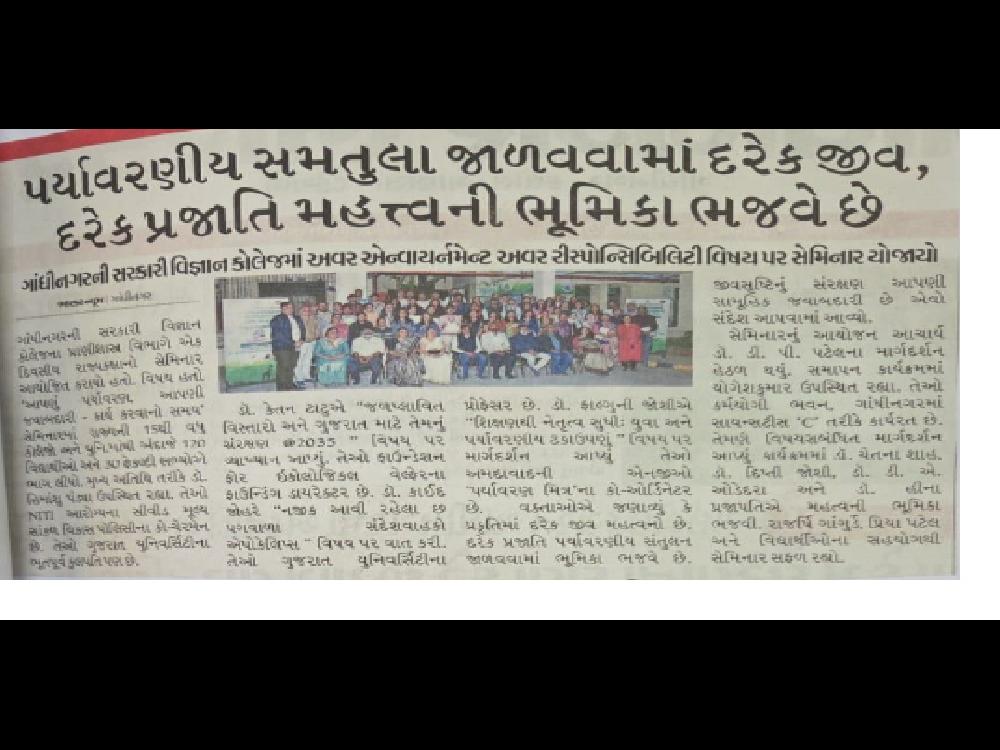
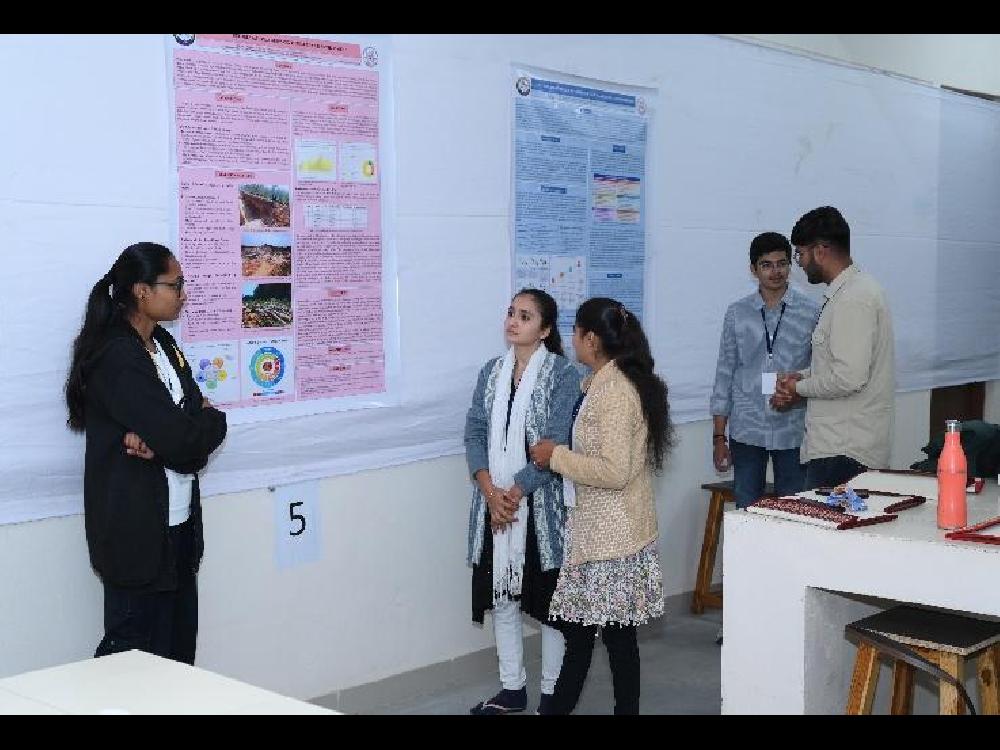
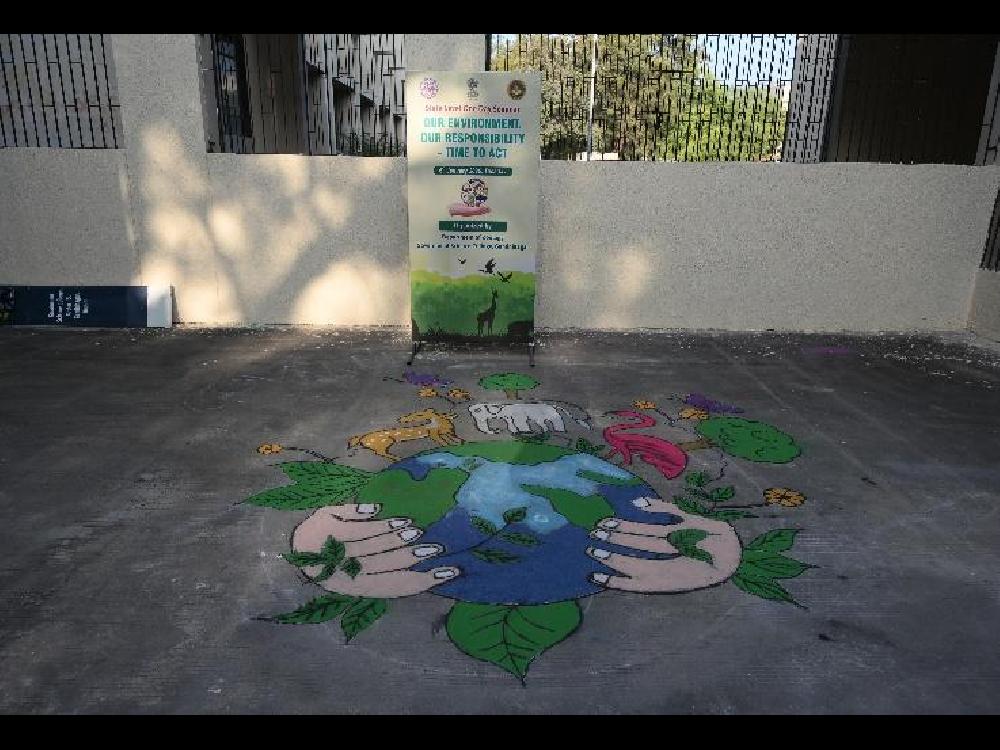
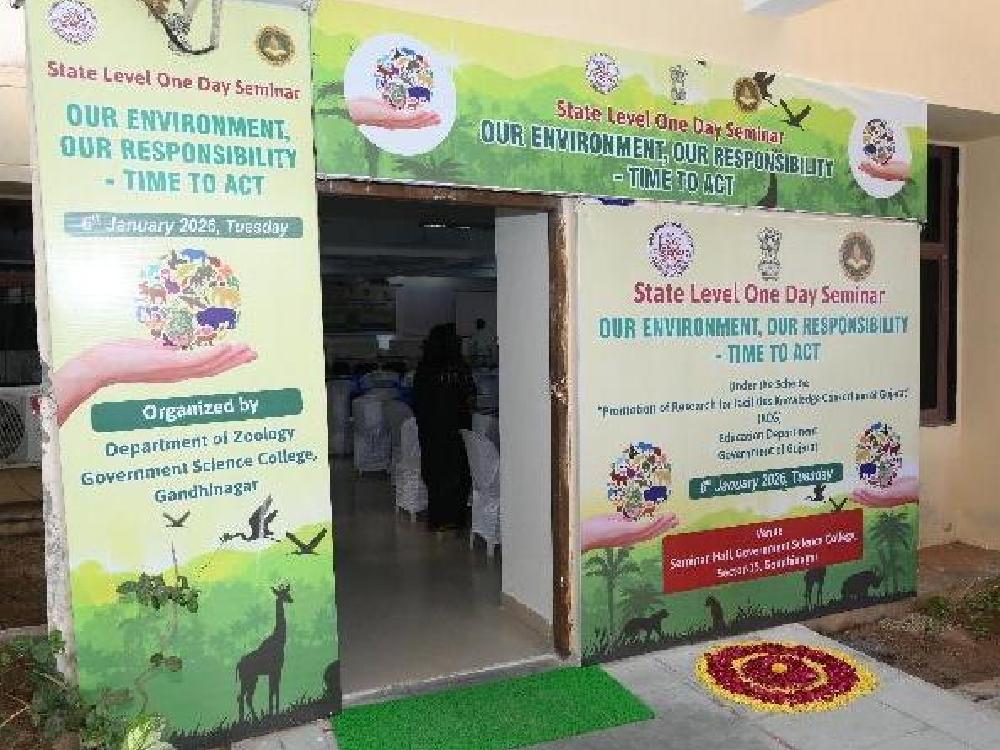
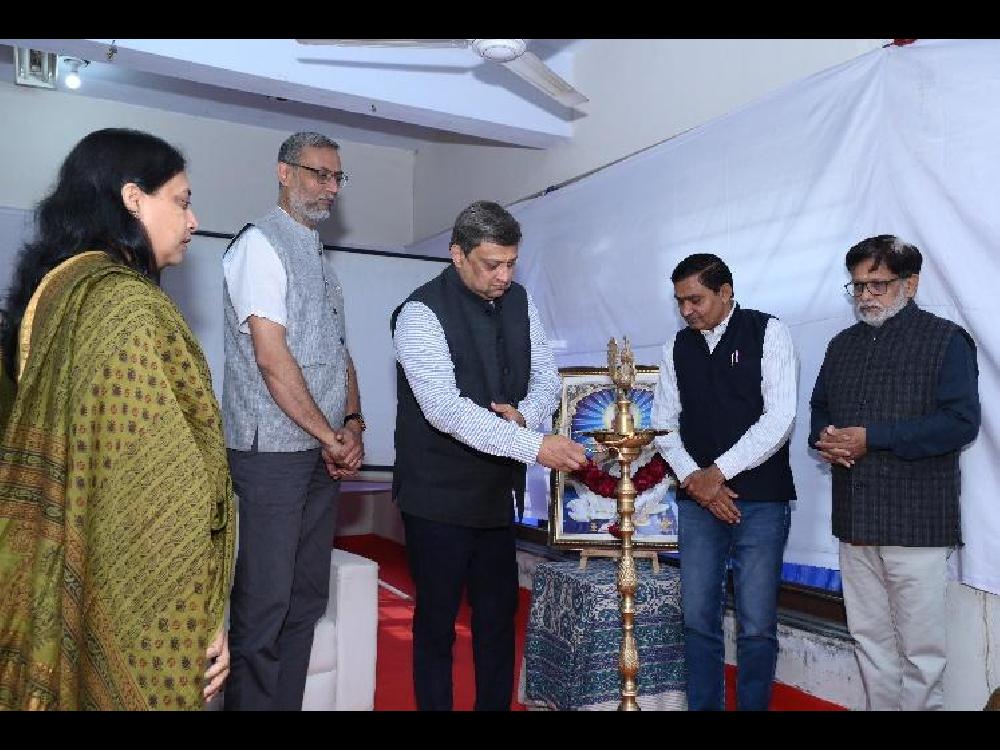
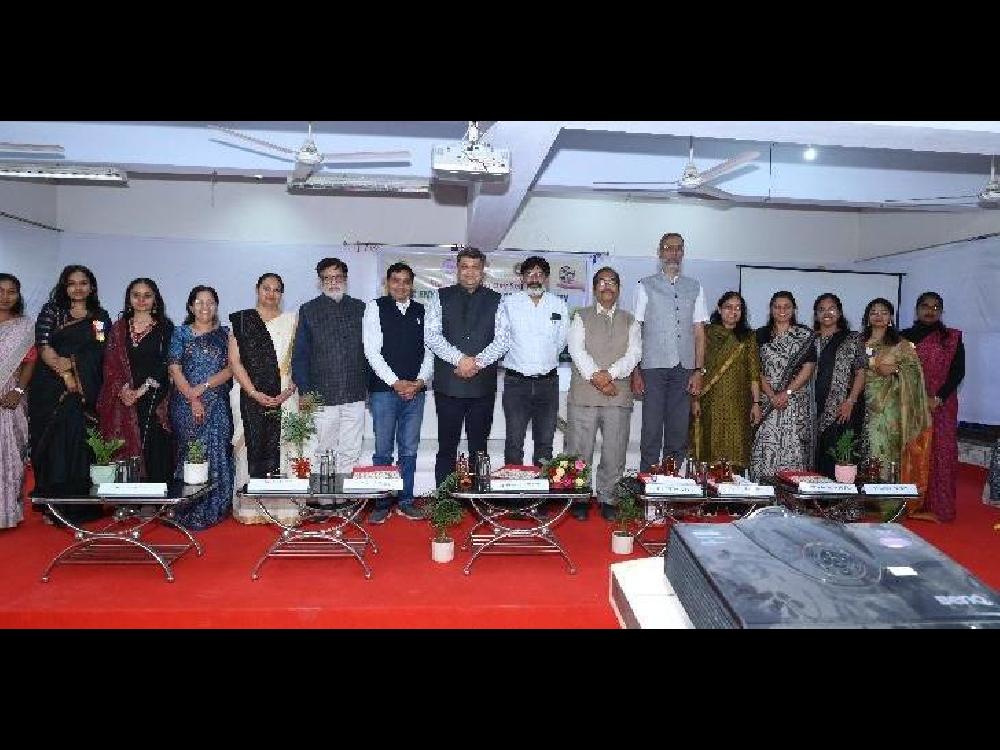
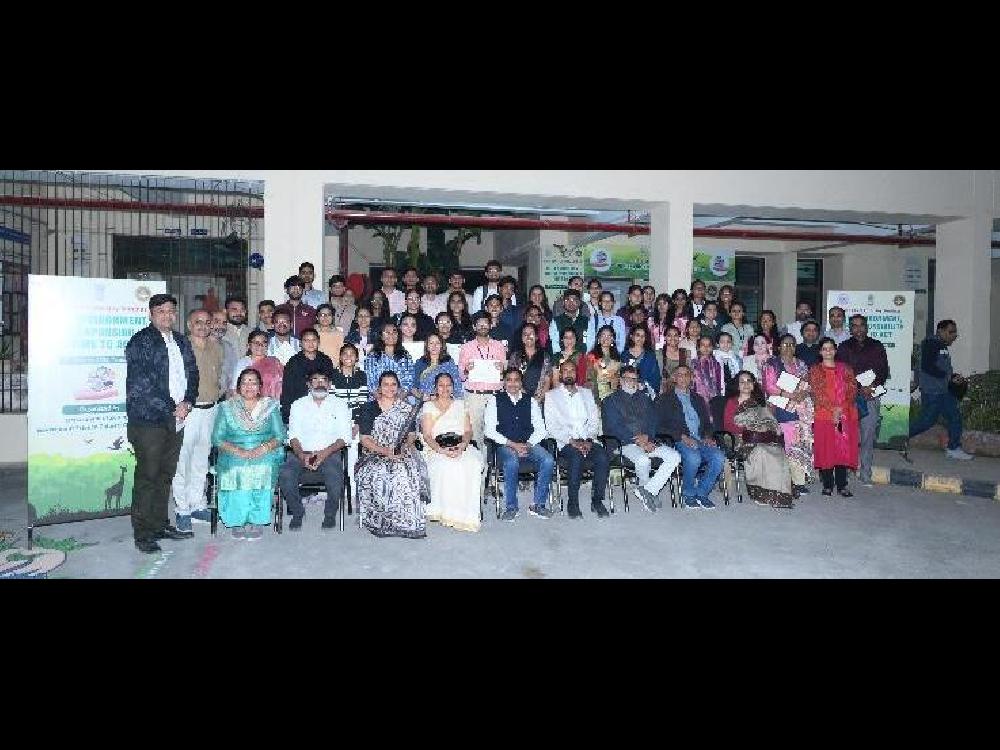
Dr. Himanshu Pandya (Co-Chairman, Policy on Seaweed Value Chain Development in India, NITI Aayog, Government of India, and Former Vice-Chancellor, Gujarat University) remained present in the seminar “Our Environment, Our Responsibility – Time to Act” as the Chief Guest. He delivered an inspiring speech highlighting the importance of environmental responsibility and the urgent need for collective action
towards sustainable development. During his address, he also emphasized the role of research and innovation in solving environmental challenges and guided students and faculty about various government research policies, funding opportunities, and national-level initiatives that encourage scientific research. He motivated participants to actively engage in research activities and contribute towards policy-driven environmental solutions.
Dr. Ketan Tatu, Founding Director of the Foundation for Ecological Welfare, delivered an insightful and informative expert lecture on the topic “Wetlands and Their Conservation for Gujarat @2035”. In his lecture, he explained the ecological significance of wetlands and described how wetlands play a vital role in maintaining biodiversity, supporting migratory birds, recharging groundwater, and controlling floods. He also highlighted the current threats faced by wetlands in Gujarat, such as urbanization, industrial pollution, encroachment, climate change, and improper waste disposal. He emphasized the urgent need for scientific conservation strategies and community participation to protect these fragile ecosystems. Dr. Tatu also shared a future-oriented vision for wetland management in Gujarat by 2035, stressing the importance of policy support, ecological restoration, sustainable development, and awareness programs. His lecture provided valuable knowledge and inspired participants to actively contribute towards wetland conservation and environmental sustainability.
Prof. Dr. Kaid Johar, Department of Zoology, Gujarat University, delivered an engaging and thought-provoking expert lecture on the topic “Six-Legged Messengers of an Approaching Apocalypse”. In his lecture, he explained the crucial role of insects in maintaining ecological balance and referred to them as “messengers” because changes in insect populations directly indicate the health of the environment. He highlighted how insects contribute significantly to ecosystems through pollination, decomposition, soil formation, nutrient recycling, and as a key part of the food chain. Prof. Johar also discussed the alarming decline in insect diversity and population across the world due to factors such as habitat destruction, excessive pesticide use, climate change, pollution, and urbanization. Through various examples, he
explained that the disappearance of insects can lead to serious ecological consequences, including reduced agricultural productivity, disruption of food webs, and loss of biodiversity. His lecture strongly emphasized that the decline of insects is an early warning signal of a larger environmental crisis. Overall, his expert session created strong awareness among participants about the urgent need to protect insect biodiversity and adopt eco-friendly practices for environmental conservation.
Dr. Falguni Joshi, Co-ordinator of the Ahmedabad-based NGO “Paryavaran Mitra”, delivered an inspiring and motivational expert lecture on the topic “From Learning to Leading: Youth and Environmental Sustainability”. In her talk, she emphasized the powerful role of youth in building a sustainable future and highlighted how young minds can transform environmental learning into real-life action. She encouraged students to move beyond classroom knowledge and become responsible environmental leaders by adopting sustainable practices in daily life such as waste segregation, plastic-free lifestyle, water conservation, energy saving, and plantation activities. She also discussed the importance of awareness campaigns, community participation, and youth-led initiatives for solving environmental challenges at the local and global level. Dr. Joshi motivated the participants to actively engage in environmental movements and explained that even small actions taken by individuals can create a significant impact when performed collectively. Her session inspired students to take leadership in promoting sustainability and become “environmental ambassadors” in society.